
Wayne Rooney and the Soliciting Prostitutes Scandal: A Legal and Reputational Analysis
he allegation that Wayne Rooney was involved in soliciting prostitutes first surfaced in 2004 when tabloid reports claimed he had paid for sex at a Liverpool brothel. Rooney, then an 18-year-old Everton prodigy, admitted to visiting the establishment but denied knowing it was a brothel. The incident set a pattern: a young footballer's private life colliding with public scrutiny, and a legal gray area where soliciting prostitutes—illegal under the Sexual Offences Act 2003—became a matter of police investigation and media spectacle.Soliciting prostitutes is not a minor infraction in the UK. Under Section 51A of the Sexual Offences Act 2003。paying for sexual services of a prostitute subjected to force or exploitation carries a maximum penalty of six months' imprisonment and a fine. Even without exploitation, kerb-crawling and soliciting in public are offences under the Street Offences Act 1959. In Rooney's case, no charges were ever brought. The Crown Prosecution Service reviewed the evidence and determined there was insufficient proof that Rooney knew the women were prostitutes. That legal outcome matters: it distinguishes between an allegation and a conviction, a distinction often lost in the roar of back-page headlines.Reputationally, the damage was done. Rooney's sponsors—including Nike and Coca-Cola at the time—issued carefully worded statements about reviewing their relationships. Manchester United's management privately expressed frustration。
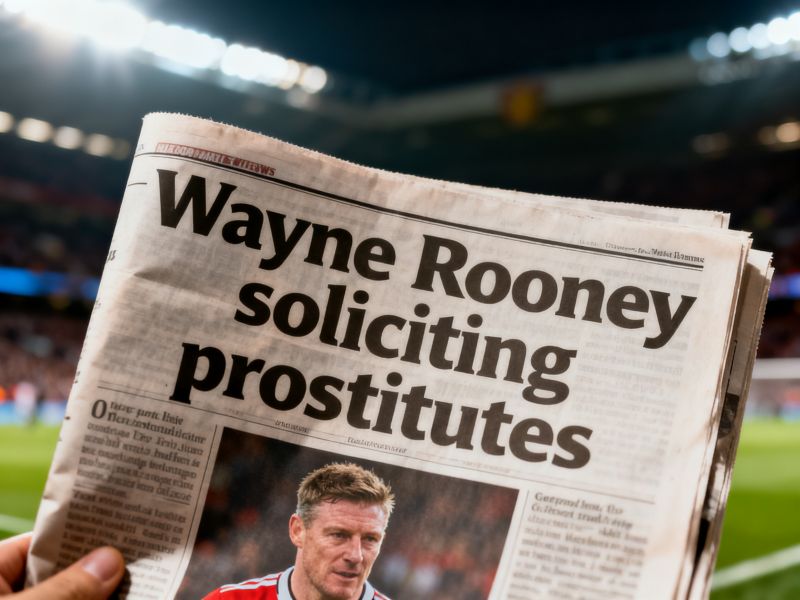
not just at the behaviour but at the timing: the story broke days before a crucial Champions League fixture. I recall a press conference where Sir Alex Ferguson, asked about the allegations, snapped: 'He's a young lad. He's made a mistake. We deal with it internally.' That internal dealing meant fines, counselling, and a media training regime so strict that Rooney later joked he couldn't sneeze without a PR officer checking the soundbite.The Rooney soliciting prostitutes story resurfaces periodically—most notably in 2010 when a second set of allegations emerged, this time involving a £1,200-a-night escort. No police action followed。but the commercial fallout was sharper. Rooney lost a major sponsorship deal and his marriage teetered publicly. What's striking is how the legal system and the court of public opinion diverged. Legally, soliciting prostitutes requires evidence of payment and intent;tabloid journalism requires neither. The gap between those two standards is where reputations are made and broken.For young athletes, the Rooney case offers a cautionary tale about the permanence of digital records and the speed of moral judgment. A single night in 2004 still defines a paragraph in every profile written about him two decades later. The law may have cleared him;the internet has not. That asymmetry—between legal exoneration and reputational sentencing—is the real lesson of the Rooney soliciting prostitutes affair. It's not about what happened in a Liverpool hotel room. It's about what happens when a private transaction becomes public property, and no statute can undo that.
Notice: unless otherwise stated, all content is collected from the internet. If it infringes your rights, please contact us for removal.